Scary Night Halloween SVG: Graphics for Crafts & Seasonal Branding
First Impression: Moody, Cohesive, and Instantly Thematic
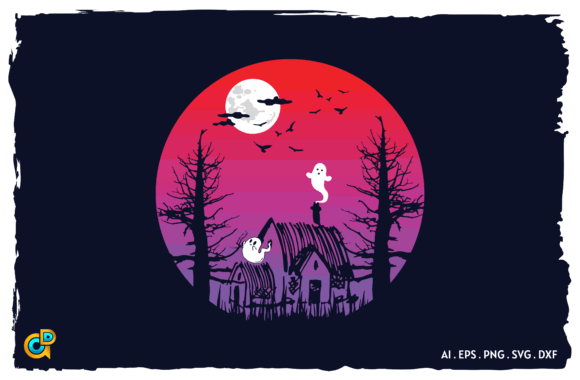
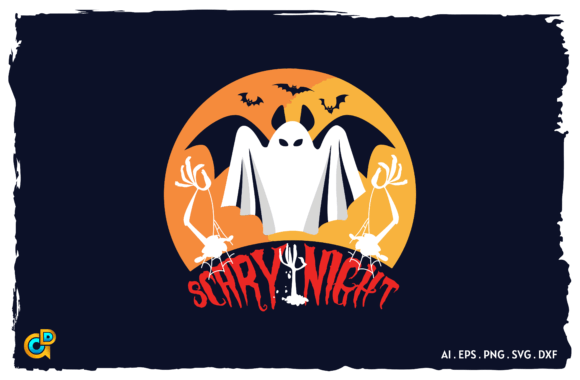
Opening Scary Night Halloween SVG felt like stepping into a well-curated haunted vignette—no clutter, no visual noise. The composition balances eerie elegance with playful spookiness: layered silhouettes of gnarled trees, a crescent moon pierced by bats, subtle fog gradients, and finely detailed jack-o’-lanterns with expressive, asymmetrical grins. It’s not cartoonish or juvenile; it leans into gothic illustration with hand-drawn texture and intentional negative space. For a client project—say, a boutique candle line launching “Midnight Hollow” limited-edition scents—the mood aligns perfectly: mysterious but marketable, nostalgic but fresh.
Where It Shines in Real Client Work
This graphic design asset excels where atmosphere matters most. On product mockups—especially t-shirt design, mugs, and tote bags—it anchors the entire visual narrative without overwhelming supporting copy. As a hero graphic on an Etsy product page or seasonal landing page, Scary Night Halloween SVG adds instant thematic weight. Its 4500×5400 pixel PNG at 300 DPI delivers crisp detail for large-format prints like posters, window decals, or event banners for local haunted trails or craft fairs. In packaging design, it works beautifully as a foil-stamped accent on kraft boxes or as a die-cut overlay on sticker sheets—especially when paired with matte black or deep plum backgrounds.
For digital use, the SVG and EPS files scale flawlessly across social media graphics: Instagram carousels, Pinterest pins, and Canva templates all benefit from its clean vector paths. I tested it inside a branded email header for a handmade business newsletter—scaled down to 320px wide—and it retained legibility and charm. As a Cricut project base, the DXF and SVG layers separated cleanly, allowing selective cutting for layered vinyl decals or wood-burned signs. Even in editorial design—like a Halloween-themed blog feature or magazine spread—it functions as both illustration and decorative frame, guiding the eye without competing with body text.
Strategic Use Cases Across Creative Markets
- Print-on-demand sellers: Works best on dark apparel (navy, charcoal, burgundy) where contrast pops; avoid light heather grey unless inverted or outlined.
- Etsy product listings: Ideal for printable design bundles—pair with coordinating patterns (e.g., cobwebs, potion bottles) to build a cohesive design bundle.
- Small business branding: Effective as a secondary brand element—not a logo, but a campaign-specific motif for October promotions, loyalty cards, or limited-run packaging seals.
- Sublimation design: The high-res PNG renders rich shadows and soft gradients essential for ceramic mugs and phone cases—no banding or pixelation at standard print sizes.
- Social media graphics: Scales elegantly for Instagram Stories (1080×1920) and Facebook cover images; use the SVG version to add subtle animated opacity shifts in After Effects exports.
Where Caution Is Required
Scary Night Halloween SVG isn’t built for minimalist corporate identity or ultra-clean tech branding. Its textured linework and atmospheric density reduce effectiveness below 120px width—so skip using it as a favicon, app icon, or tiny watermark. In crowded layouts—think multi-element flyers or busy website headers—it risks visual competition unless isolated with ample breathing room or muted via opacity overlays. Avoid pairing it with overly ornate script fonts or dense serif type; instead, contrast its organic weight with bold sans serifs (e.g., Montserrat Bold) or restrained display fonts for hierarchy control.
It also demands background awareness: the PNG includes transparency, but the default shadowing assumes light-to-mid tone substrates. On pure white or ultra-bright backgrounds, test contrast manually—some bat wings or tree branches may read too softly. And while the AI and EPS files are fully editable, inspect anchor points before scaling beyond 200% in Illustrator; minor path simplification may be needed for ultra-large murals.
Designer Notes You Can’t Skip
- Test in grayscale first: Confirm tonal separation between elements—especially moon vs. sky and jack-o’-lantern highlights—before committing to color schemes.
- Check licensing rigorously: Verify commercial license covers your client’s use case—e.g., resale on POD platforms, inclusion in Canva templates, or physical product labels.
- Preview on real mockups: Drop the SVG into a Cricut Design Space project *and* a Shopify product preview to assess how it interacts with materials, lighting, and adjacent branding.
- Compare font pairings: Run quick tests against serif (Lora), sans serif (Inter), script (Dancing Script), and handwritten (Caveat)—note which maintains readability and emotional alignment.
- Inspect PNG transparency: Open in Photoshop and toggle background layers; ensure no stray anti-aliasing halos or semi-transparent artifacts linger around edges.
- Validate vector editability: Open the SVG in Illustrator—check if grouped layers are labeled logically and if clipping masks or compound paths hinder customization.
Final Verdict: A High-Utility Seasonal Asset
Scary Night Halloween SVG isn’t just clipart—it’s a thoughtfully constructed creative design asset that supports storytelling, not just decoration. For a client launching a themed collection, running a local event, or refreshing their October marketing visuals, it delivers immediate cohesion and professional polish. Its strength lies in versatility across Crafts and Graphics contexts: equally at home on a laser-cut wooden ornament, a sublimated pillowcase, or a responsive web banner. But like any strong visual motif, it earns its place only when intentionally placed—not dropped in, but designed *around*. If your project needs mood, memorability, and commercial-grade flexibility, this SVG design earns a spot in your seasonal toolkit—just remember to test, adapt, and align it with your client’s voice, not just the season’s trend.