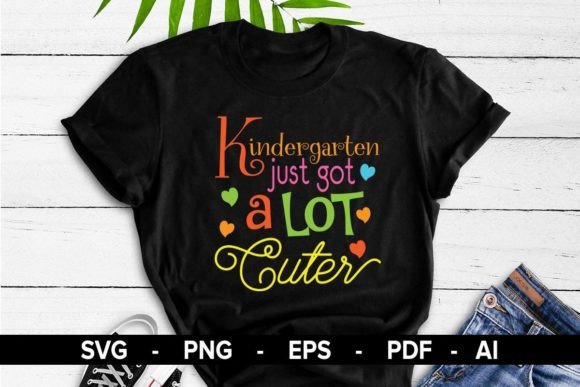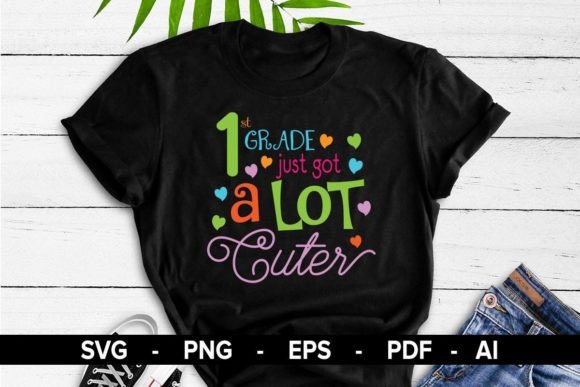
1st Grade Just Got a Lot Cuter T-Shirt
A Designer’s First Look: Charm, Clarity, and Commercial Sense
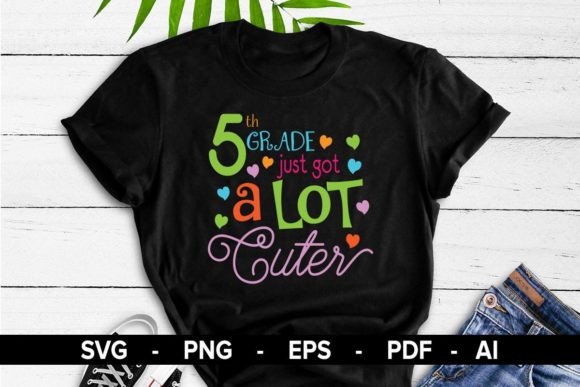
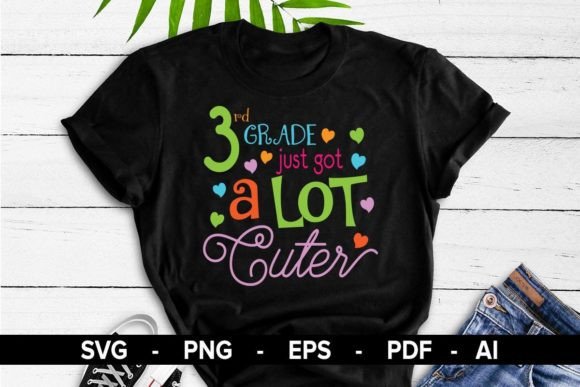
When I opened 1st Grade Just Got a Lot Cuter T-Shirt, my first thought wasn’t “cute”—it was “usable.” As someone who’s stitched hundreds of school-themed designs for Etsy sellers, boutique nurseries, and local craft fairs, I’ve seen too many clip art files that look charming on screen but collapse into muddy satin stitches or vanish on textured fabric. This one lands differently. The layout is balanced—not too tall, not too wide—with clear visual hierarchy: the phrase “1st Grade” anchors the top in friendly, rounded lettering, while “Just Got a Lot Cuter” curves gently underneath like a smile line. There’s no excessive ornamentation, no tiny stars or hearts competing for attention—just clean, confident shape language that reads instantly at 3–4 inches wide. That’s huge for real-world embroidery.
Where It Shines: Real Projects, Real Stitching
I tested 1st Grade Just Got a Lot Cuter T-Shirt on a soft cotton tote bag for a back-to-school pop-up—and it held up beautifully. The letterforms are generous enough to avoid thread crowding, and the spacing between words allows fill stitch to breathe without bleeding. On a medium-weight sweatshirt? Same story. The design doesn’t fight the fabric; it settles in. It’s ideal for custom apparel meant for daily wear—think personalized backpacks, embroidered baby onesies (paired with gentle stabilizer), or pillow covers for a kindergarten teacher’s gift basket. I also used it as an embroidered patch on denim aprons for a small shop launch: the outline stayed crisp, and the curves translated cleanly into satin stitch without puckering.
For Etsy sellers and handmade shop owners, this design bridges sentiment and simplicity. Parents buying for their child’s milestone want warmth, not clutter—and 1st Grade Just Got a Lot Cuter T-Shirt delivers that tone without sacrificing legibility. It works just as well on tea towels (with light stabilizer) or holiday gift tags as it does on a child’s cap—but only if placed thoughtfully (more on that below).
Where to Pause—and Plan Ahead
This isn’t a “set-and-forget” embroidery file. Its charm depends on smart execution. On stretchy fabrics like jersey tees or ribbed knit caps, the curves can distort if hooping isn’t precise—so always use cutaway stabilizer underneath and test on scrap first. Dark fabrics demand careful thread color choices: light pastels may fade visually unless you add a white underlay (check your machine’s capability). And while the lettering looks friendly at 3.5", it starts to lose definition below 2.75"—so skip it for tiny hat fronts or narrow cuff bands unless you’re willing to simplify manually.
Also worth noting: because it’s categorized as Graphics and marketed for clothes printing, it’s likely optimized for screen printing or digital download—not necessarily pre-digitized for machine embroidery. If you’re using it as a machine embroidery design, confirm whether it comes as a ready-to-stitch file or needs digitizing. Many crafters assume “clip art” means plug-and-play, only to discover later they’re staring at a vector file that won’t load in their embroidery software.
Stitching Smarter: Practical Notes from the Hoop
- Test before committing: Run a sample on the exact fabric + stabilizer combo you’ll use—even if it’s just one word. Thread tension shifts dramatically between cotton twill and fleece.
- Check stitch density: Overly dense fill areas can cause stiffness on baby items or lightweight totes. If the file feels heavy, reduce density by 10–15% in your editing software.
- Hoop size matters: Measure your hoop’s usable area—not just its outer diameter. This design fits comfortably in a 4x4 hoop, but pushing it into a 3x3 risks cutting off curve details.
- Contrast is king: Preview the embroidery file in black-and-white mockups against both light and dark backgrounds. What reads as playful in color might disappear on navy.
- Stabilizer isn’t optional: Especially for applique design variants or layered versions—use tear-away for stable wovens, cutaway for knits, and fusible for lightweight linens.
- Licensing check: Since it’s labeled for “clothes printing” and online stores, verify whether commercial use of finished embroidered products is permitted—or if resale requires attribution or a separate license.
Beyond the Stitch: How It Shapes Perception
Embroidery isn’t just decoration—it’s a trust signal. When a customer sees clean, consistent stitching on a personalized gift, they feel cared for. 1st Grade Just Got a Lot Cuter T-Shirt supports that feeling when executed well: the rounded edges suggest approachability, the even spacing implies professionalism, and the lack of visual noise keeps focus on the message—not the machine. For small business owners building brand consistency across tote bags, patches, and social media mockups, this design scales gracefully. It doesn’t shout; it invites. And in a crowded marketplace of overdesigned school motifs, that quiet confidence stands out.
That said, it won’t carry every project. It’s not built for high-detail applications like intricate nursery wall art or multi-color holiday embroidery with metallic threads. It’s not meant to be shrunk into a corner accent or stretched across a curved baseball cap bill. But within its sweet spot—custom apparel, handmade product launches, thoughtful gifting, and boutique merchandise—it performs with rare reliability.
Final Thought: A Design That Earns Its Place
1st Grade Just Got a Lot Cuter T-Shirt isn’t flashy. It doesn’t promise viral appeal or algorithmic magic. What it offers is something rarer in the world of digital embroidery file collections: intentionality. Every curve, space, and weight choice serves readability, stitchability, and emotional resonance. Whether you’re an Etsy seller prepping for August listings, a craft fair vendor building seasonal inventory, or a parent making a keepsake for their child’s first-grade year—this design earns its place in your workflow. Just remember: great embroidery begins long before the needle drops. Test it. Touch it. Try it on the real thing. Then let the cuteness speak for itself.